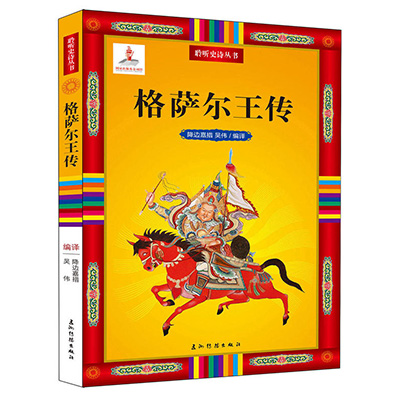
The Epic of King Gesar
Overview
The Epic of King Gesar is regarded as the world's longest folk epic, chronicling the exploits of an 11th-century Tibetan demigod king. This epic is a cornerstone of Tibetan cultural heritage, reflecting the history, values, and beliefs of ancient Tibetan society. The narrative follows King Gesar as he conquers his foes and aids the ordinary people, weaving together myth and history into an enduring tale that has captured the imagination of generations.
Origin and Oral Tradition
The legend of King Gesar originates from the 11th century and has been passed down orally through generations of singers and storytellers, primarily in the Xizang autonomous region, Inner Mongolia autonomous region, and Qinghai province. Traditionally, these performers were often illiterate herders or farmers who memorized and recited the epic, serving as custodians of the culture and history embedded within the narrative. The oral tradition has been integral to the preservation of the epic, although it poses challenges for consistent documentation and academic study due to its variations and adaptations over time.
Compilation and Publication
Efforts to compile and publish the epic have been ongoing, with researchers gathering numerous editions from across the Tibetan regions. A significant milestone was reached in 2019 when the most extensive collection of The Epic of King Gesar was published, comprising over 370 volumes and exceeding 80 million words. This comprehensive collection includes previously unpublished versions, offering a richer and more complete picture of the epic's narrative. The project aims to preserve the cultural heritage encapsulated in the epic and make it accessible to a broader audience, including translations into Chinese and English.
Cultural Significance and Recognition
The Epic of King Gesar holds immense cultural significance as it encapsulates the social, religious, and historical aspects of Tibetan life. It was inscribed on the UNESCO list of World Intangible Cultural Heritage in 2009, acknowledging its value as a cultural treasure. The epic is not only a narrative of heroism and adventure but also a repository of Tibetan folklore, wisdom, customs, and moral teachings. It serves as a vital resource for understanding ancient Tibetan society and continues to influence cultural expressions such as Tibetan opera, music, and dance.
Modern Adaptations and Preservation Efforts
Contemporary efforts to preserve and promote The Epic of King Gesar include various multimedia projects, such as animations, films, and comic books. These creative adaptations aim to introduce the epic to younger audiences and ensure its continued relevance in an age dominated by digital media. Initiatives like the establishment of a multi-media database and the organization of cultural festivals have been undertaken to protect and celebrate the epic's legacy. Furthermore, educational programs in schools are being developed to integrate the epic into the curriculum, fostering an appreciation of Tibetan heritage among students.
Research and Academic Study
The academic study of The Epic of King Gesar involves interdisciplinary research, encompassing fields such as literature, anthropology, history, and linguistics. Scholars from around the world, including China, Russia, and Mongolia, have engaged in research to explore the epic's textual variations, thematic elements, and oral transmission. Conferences and forums are held to discuss the challenges and achievements in the study of the epic, promoting collaboration and knowledge exchange among researchers. The ongoing effort to compile, translate, and archive the epic underscores its significance as a subject of scholarly inquiry and cultural preservation.
Contribution to Tibetan Identity
The Epic of King Gesar plays a crucial role in shaping and reinforcing Tibetan identity. It is a source of pride for Tibetans, reflecting their rich cultural heritage and resilience. Through its narratives of bravery, wisdom, and compassion, the epic continues to inspire and guide communities, serving as a moral compass and a symbol of cultural continuity. Its influence extends beyond Xizang, resonating with audiences worldwide who appreciate its universal themes of heroism and the struggle for justice and harmony.
Future Prospects
The future of The Epic of King Gesar lies in the balance between preserving its traditional form and adapting it to contemporary contexts. As globalization and technological advancements reshape cultural landscapes, innovative methods for storytelling and cultural engagement are essential. The epic's adaptability to new media formats and its incorporation into educational and cultural programs will determine its continued relevance and impact. Ensuring that the epic remains a living tradition, accessible and meaningful to future generations, is the ultimate goal of ongoing preservation efforts. Article reference1. Forum on heroic epics of China. chinadaily.com.cn. 20232. Complete collection of Tibetan epic to be published in 2019. chinadaily.com.cn. 20183. 4 more books on King Gesar's epic published. chinadaily.com.cn. 2018Photo Gallery(5 pictures)CategoriesLiteratureTagChinese Folk LiteratureIntangible Cultural Heritage of Humanity in ChinaRelatedTibetan Folk LiteratureCatalogue1. Overview2. Origin and Oral Tradition3. Compilation and Publication4. Cultural Significance and Recognition5. Modern Adaptations and Preservation Efforts6. Research and Academic Study7. Contribution to Tibetan Identity8. Future Prospects- - - []








